 NaijaVibe NaijaVibe | Download Latest Nigerian Music & Mp3s
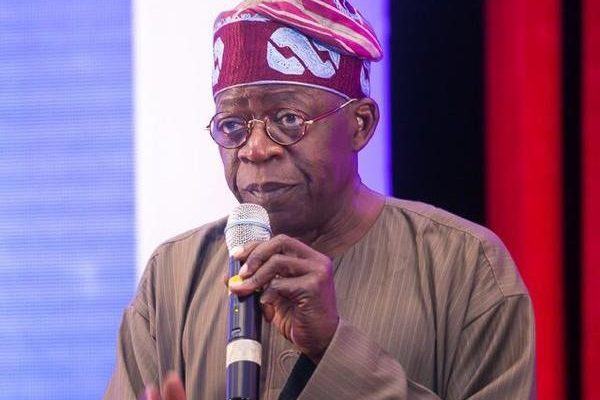
Bola Tinubu
The Presidency has come out to refute allegations made by former Jigawa State Governor, Alhaji Sule Lamido, concerning President Bola Tinubu’s role during the annulment of the June 12, 1993.
The Special Adviser to the President on Information and Strategy, Bayo Onanuga, recently had his say via a press statement, and Nigerians have been reacting.
According to him, President Tinubu’s mother, Alhaja Mogaji, never mobilised market women to support the unfair annulment, and even though she once had a close relationship with Babangida, their friendship was before the annulment crisis.
He added that Lamido claiming Tinubu only became relevant after the formation of NADECO is a regrettable attempt at revisionism.
His words, “The attention of the Presidency has been drawn to recent comments made by Alhaji Sule Lamido, former Governor of Jigawa State, on live television, in which he falsely accused President Bola Tinubu of supporting the annulment of the June 12, 1993, presidential election.
Alhaji Lamido’s claims represent a distortion of history and a regrettable attempt at revisionism. He alleged that President Tinubu only rose to prominence after the formation of NADECO and claimed that Tinubu’s mother, Alhaja Abibatu Mogaji, mobilised market women to back the annulment. These allegations are patently false.
Let us set the record straight: Alhaja Mogaji never mobilised market women to support the unjust annulment. Had she done so, she would have lost her position as market leader in Lagos. While she once had a personal relationship with then-President Babangida, this was before the annulment crisis.
It is important to remind Nigerians that Alhaji Lamido, as secretary of the Social Democratic Party (SDP)—the party whose candidate, MKO Abiola, won the June 12 election—was among those who failed to oppose the military’s injustice. The SDP leadership, including Lamido and chairman Tony Anenih, wrote their names in the book of infamy by surrendering the people’s mandate without resistance. To their eternal shame, Lamido and Anenih teamed up with the defeated National Republican Convention to deny Abiola his mandate.
In sharp contrast, Senator Bola Tinubu stood firm even before General Abacha dissolved the political parties and all democratic institutions, including the National Assembly, on November 17, 1993, following his coup. Days after General Babangida addressed the Senate and announced his decision to step aside on August 27, 1993, the setting up of an interim government to replace him, Senators debated the speech.
On the Senate floor on August 19, 1993, Tinubu unequivocally condemned the annulment, describing it as another coup d’état and urging Nigerians to reject injustice and lawlessness. The records captured his contribution, showing that he supported upholding the June 12 election, not against it, as Lamido claimed.
The election winner, Abiola, was out of the country when the legislators debated Babangida’s offer to step aside for an interim government. He returned in September 1993. And who followed him to the Abacha military group, then openly planning a coup against the Ernest Shonekan-led ING? It was Tinubu. Photographs exist today, showing Tinubu behind Abiola and Abacha.
Abacha took over on November 17, 1993, and dissolved all democratic institutions, including governors, the National Assembly, and the state legislature. Tinubu and a group of senators reconvened in Lagos, defying the junta. Tinubu, Ameh Ebute, Abu Ibrahim, and others were arrested and kept at Alagbon.
The police took them to court and fabricated a case against them. While in police detention, Tinubu continued to fund pro-June 12 protests in Lagos, including the blockade of the Third Mainland Bridge. Weeks after Abacha supplanted the ING, it quickly became clear to Abiola and Tinubu that Abacha would not be a soldier of democracy as he reneged on allowing Abiola to reclaim his mandate.”
WOW.