 NaijaVibe NaijaVibe | Download Latest Nigerian Music & Mp3s
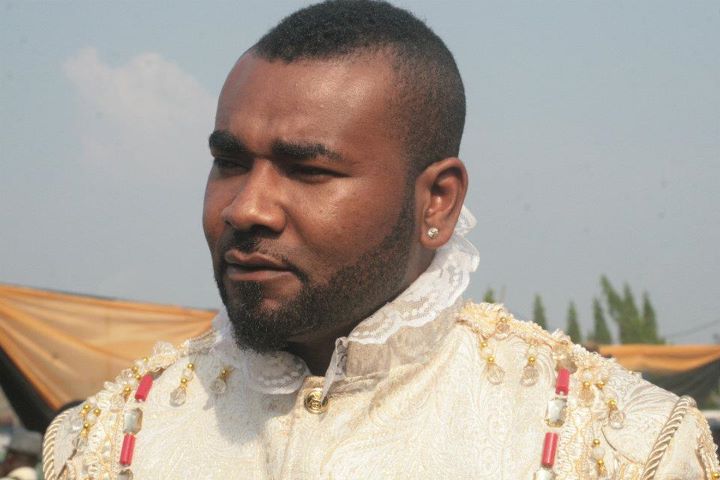
Prince Eke
Nollywood actor Prince Eke has come out to slam his fellow celebrities. He recently had his say via his Instagram account, and fans have been reacting.
According to him, several Nigerian celebrities are not worth emulating because they are not a good influence on the people and rarely speak against corruption or bad governance.
Eke added that it is always sad to see broke and depressed Nigerian celebrities preferring to sell their conscience to their oppressors.
His words, “The earlier you understand that most of these so called celebrities are not worth being influenced by, the better for you.
Actors and musicians alike watched Nigeria drown in corruption and bad governance and kept their mouths shut. Why? Because they are waiting for politicians to throw them a few peanuts to come and dance during campaigns.
If Nigeria actually worked, many of them would still be earning royalties from movies they acted in decades ago. But instead of demanding a working system, they line up to be used by the same politicians destroying the country.
So don’t be shocked when you see them standing beside our oppressors. Many of them are broke, desperate, and perfectly willing to sell their conscience to the highest bidder.
After all, conscience no dey put food for their table. Ndi ara.”
WOW.
Nollywood is a sobriquet that originally referred to the Nigerian film industry. The origin of the term dates back to the early 2000s, traced to an article in The New York Times. Due to the history of evolving meanings and contexts, there is no clear or agreed-upon definition for the term, which has made it a subject to several controversies.
The origin of the term “Nollywood” remains unclear; Jonathan Haynes traced the earliest usage of the word to a 2002 article by Matt Steinglass in the New York Times, where it was used to describe Nigerian cinema.
Charles Igwe noted that Norimitsu Onishi also used the name in a September 2002 article he wrote for the New York Times. The term continues to be used in the media to refer to the Nigerian film industry, with its definition later assumed to be a portmanteau of the words “Nigeria” and “Hollywood”, the American major film hub.
Film-making in Nigeria is divided largely along regional, and marginally ethnic and religious lines. Thus, there are distinct film industries – each seeking to portray the concern of the particular section and ethnicity it represents. However, there is the English-language film industry which is a melting pot for filmmaking and filmmakers from most of the regional industries.