


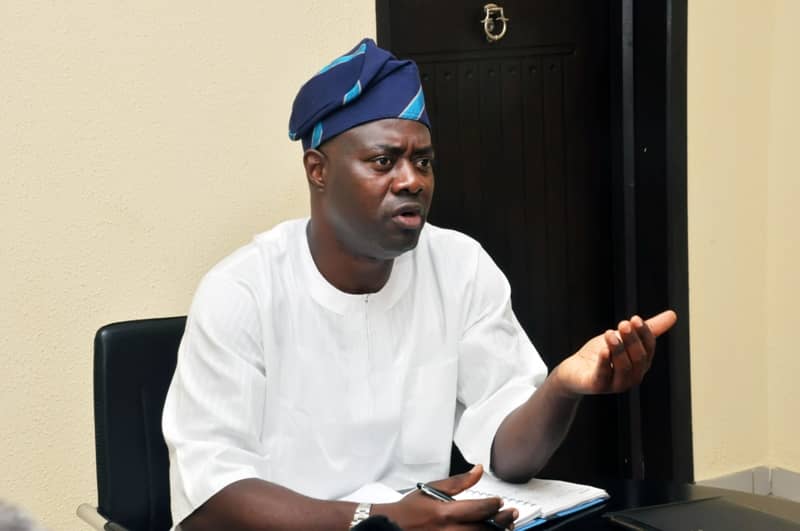
Oyo State Governor, Seyi Makinde, has criticised the Federal Government’s economic reforms. He recently had his say in a newsletter released hours ago, and Nigerians have been reacting.
Comparing his government’s approach to governance in Oyo State with the Federal Government’s handling of the economy under President Tinubu, Makinde argued that rising poverty shows the need to assess leadership by its impact on citizens rather than by improvements in economic indicators.
The governor added that Nigerians are entitled to reject a government if its policies failed to deliver the desired results within its first term.
His words, “Policies tell you what a government wants to change. The order in which it chooses to make those changes tells you how that government thinks.
There are never enough resources for government to meet every need at once. So, leadership is about what you choose to do first, what you are prepared to postpone, and who bears the cost of those choices.
We could have said government needed the money for infrastructure and asked workers and pensioners to wait.
Instead of choosing between paying people and building infrastructure, we chose to do both. We paid salaries consistently. We regularised pension payments. We began clearing inherited gratuity arrears.
Going back to our test of leadership, you can see clearly what we chose to do first – meet our obligations. And we accepted the fiscal cost of that choice.
Reform is not only about fixing the numbers. It is also about how people survive the transition.
These 23 million are not just numbers. They are our parents, neighbours, friends and children. Macroeconomic stability has not translated at the same pace into jobs, lower poverty and improved living standards for the majority of Nigerians.
That is part of the scorecard the Federal Government must own.
For me, leadership must be able to think about two things at once: what structural change does the economy need? And how do we protect people’s ability to live, work and produce while we make that change?
And if, after four years, a leader has not been able to make those choices work for the people, Nigerians have every right to say: let us try someone else.
So, the next election is ultimately about two questions: do you agree with how this government is thinking? Are you satisfied with what it has chosen to prioritise?”
3

Visit NaijaVibe HoT 100 Songs