

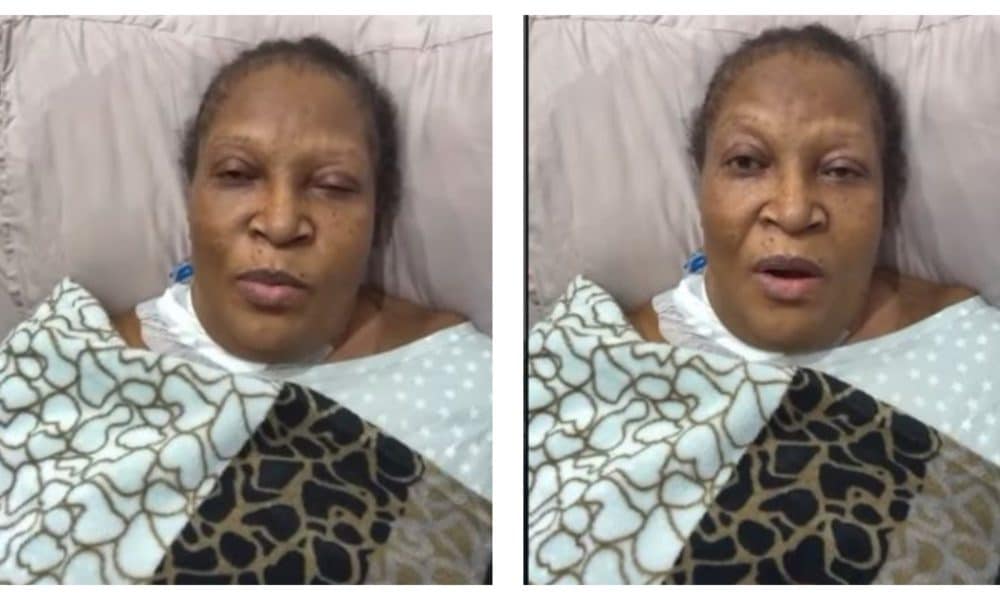
Ngozi Nwosu’s management has broken its silence on the actress’ medical condition after her viral plea for assistance. Recall that the actress publicly revealed that she needs 3 surgeries costing N30 million to stay alive, and fans have been reacting.
Confirming that Ngozi is currently being prepared for surgery, the management announced that the procedure has been scheduled for next week.
Warning members of the public to rely solely on official channels for verified updates, her management urged Nigerians to continue supporting Ngozi spiritually and financially.
A statement read, “Dear Nigerians, fans, friends, and everyone who has shown love to our beloved veteran actress, Ngozi Nwosu, thank you.
We are deeply grateful for the overwhelming support, prayers, donations, calls, messages, and kind words received so far. Your generosity has made a tremendous difference.
We are pleased to share that Ngozi Nwosu is doing well and is currently being prepared for her first surgery, scheduled for sometime next week.
While we have made meaningful progress, we still need your continued support. Please keep her in your prayers, continue to share her story, and, if you are able, support her financially.
Thank you, Nigeria. Thank you to everyone around the world standing with her. Your kindness, compassion, and generosity mean more than words can express. You are amazing.”
Nollywood is a sobriquet that originally referred to the Nigerian film industry. The origin of the term dates back to the early 2000s, traced to an article in The New York Times. Due to the history of evolving meanings and contexts, there is no clear or agreed-upon definition for the term, which has made it a subject to several controversies.
The origin of the term “Nollywood” remains unclear; Jonathan Haynes traced the earliest usage of the word to a 2002 article by Matt Steinglass in the New York Times, where it was used to describe Nigerian cinema.
Charles Igwe noted that Norimitsu Onishi also used the name in a September 2002 article he wrote for the New York Times. The term continues to be used in the media to refer to the Nigerian film industry, with its definition later assumed to be a portmanteau of the words “Nigeria” and “Hollywood”, the American major film hub.
Film-making in Nigeria is divided largely along regional, and marginally ethnic and religious lines. Thus, there are distinct film industries – each seeking to portray the concern of the particular section and ethnicity it represents. However, there is the English-language film industry which is a melting pot for filmmaking and filmmakers from most of the regional industries.

Visit NaijaVibe HoT 100 Songs