

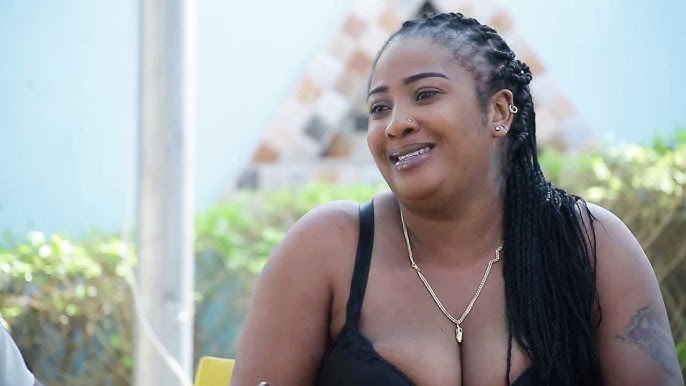
Veteran Nollywood actress Toyosi Adesanya has said that some of her colleagues attempted to undermine fundraising efforts organised for the late Tope Osoba. She recently made the shocking allegation at a candlelight tribute for the late actress on Tuesday, August 12, and fans have been reacting.
Preaching unity among actors in the movie industry, Adesanya stated that it was a shame to see fellow moviestars beefing late Osoba just because she left their association.
Describing the deceased as a committed figure who was active in Nollywood, she added that her death has made the need for solidarity among practitioners even more urgent.
Nollywood is a sobriquet that originally referred to the Nigerian film industry. The origin of the term dates back to the early 2000s, traced to an article in The New York Times. Due to the history of evolving meanings and contexts, there is no clear or agreed-upon definition for the term, which has made it a subject to several controversies.
The origin of the term “Nollywood” remains unclear; Jonathan Haynes traced the earliest usage of the word to a 2002 article by Matt Steinglass in the New York Times, where it was used to describe Nigerian cinema.
Charles Igwe noted that Norimitsu Onishi also used the name in a September 2002 article he wrote for the New York Times. The term continues to be used in the media to refer to the Nigerian film industry, with its definition later assumed to be a portmanteau of the words “Nigeria” and “Hollywood”, the American major film hub.
Film-making in Nigeria is divided largely along regional, and marginally ethnic and religious lines. Thus, there are distinct film industries – each seeking to portray the concern of the particular section and ethnicity it represents. However, there is the English-language film industry which is a melting pot for filmmaking and filmmakers from most of the regional industries.

Visit NaijaVibe HoT 100 Songs