

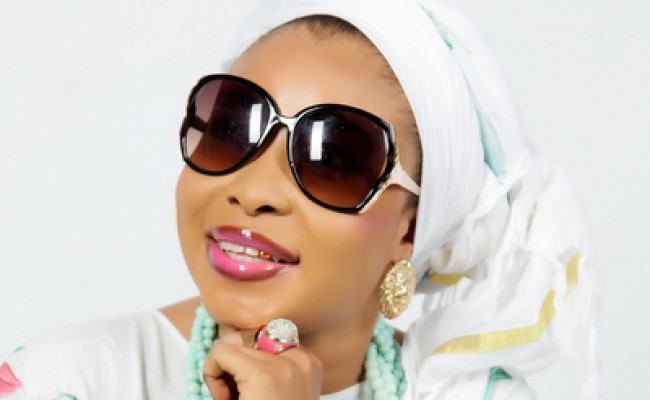
Nollywood actress Lizzy Anjorin has responded to Iyabo Ojo’s daughter, Priscilla Ojo. This comes after the two exchanged words online over comments surrounding music executive Soso Soberekon’s recent wedding.
Responding to Priscilla’s criticism via a lengthy video, Liz challenged Iyabo Ojo’s daughter to take the matter to court like she promised to do, stressing that she’ll keep attacking her family.
Adding that she is not Naira Marley or Mohbad’s family, Anjorin described herself as Iyabo Ojo’s karma.
Her words, “I challenge you, let’s go to court. You have never missed your period, you have never carried any child. Nothing can stop me from asking for DNA of that child, which I will bring my doctor. I’m not Naira Marley, I’m not Mohbad’s family. I’m Iyabo Ojo’s karma.
Since my family matter concern your mother, your life concern us too. If you are not pleased, go to court. When you go to court, court can’t stop me from speaking my truth.
I will only change names, I will continue with my show, and I’ll continue with your mother, and no case you bring, it will stay under my case with your mother.
I have dragged you filed mother to court, so any case you guys are preparing is under my case. In as much as my children’s life becomes your mother’s business, your life becomes my business.”
Nollywood is a sobriquet that originally referred to the Nigerian film industry. The origin of the term dates back to the early 2000s, traced to an article in The New York Times. Due to the history of evolving meanings and contexts, there is no clear or agreed-upon definition for the term, which has made it a subject to several controversies.
The origin of the term “Nollywood” remains unclear; Jonathan Haynes traced the earliest usage of the word to a 2002 article by Matt Steinglass in the New York Times, where it was used to describe Nigerian cinema.
Charles Igwe noted that Norimitsu Onishi also used the name in a September 2002 article he wrote for the New York Times. The term continues to be used in the media to refer to the Nigerian film industry, with its definition later assumed to be a portmanteau of the words “Nigeria” and “Hollywood”, the American major film hub.
Film-making in Nigeria is divided largely along regional, and marginally ethnic and religious lines. Thus, there are distinct film industries – each seeking to portray the concern of the particular section and ethnicity it represents. However, there is the English-language film industry which is a melting pot for filmmaking and filmmakers from most of the regional industries.

Visit NaijaVibe HoT 100 Songs