

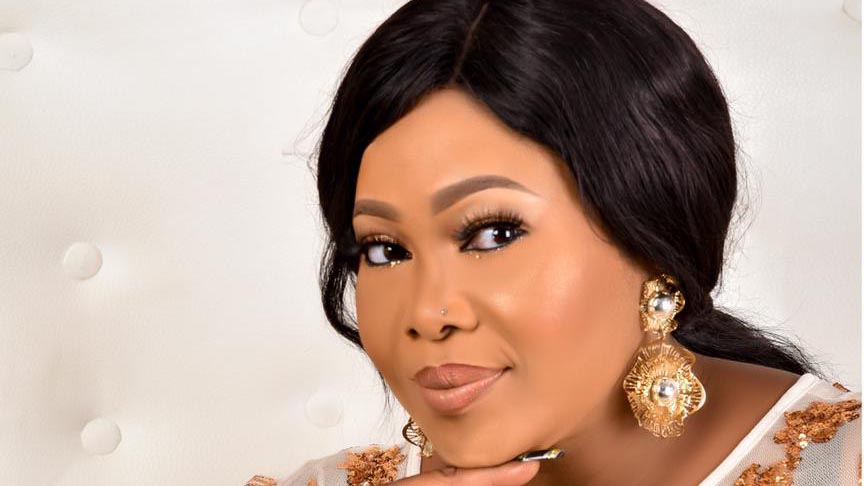
Nollywood actress Toyin Alausa has called out the rising number of cancer-related deaths in the industry. She recently had her say via a lengthy Instagram, and fans have been reacting.
Questioning why survival from cancer in Nigeria depends on popularity, connections or the willingness of influential people to foot medical bills, Toyin urged public figures to push for better healthcare systems rather than relying on donations to save specific lives.
The moviestar added that people shouldn’t wait until a colleague reaches a critical stage before rallying donations or hoping someone with political influence steps forward to help.
Her words, “In recent times, we have watched too many people in our industry lose their lives to cancer. Five, six or even more of our colleagues in one year is not just a statistic, it is a painful reminder that none of us is as safe as we think we are. Every loss leaves families grieving, colleagues devastated and an industry asking, who is next?
Why must survival depend on who you know, how popular you are, or whether someone influential is willing to pay your medical bills?
A donation can save one person today, but a functional system can save millions tomorrow. Tomorrow, it could be any one of us, or someone we love.”
Nollywood is a sobriquet that originally referred to the Nigerian film industry. The origin of the term dates back to the early 2000s, traced to an article in The New York Times. Due to the history of evolving meanings and contexts, there is no clear or agreed-upon definition for the term, which has made it a subject to several controversies.
The origin of the term “Nollywood” remains unclear; Jonathan Haynes traced the earliest usage of the word to a 2002 article by Matt Steinglass in the New York Times, where it was used to describe Nigerian cinema.
Charles Igwe noted that Norimitsu Onishi also used the name in a September 2002 article he wrote for the New York Times. The term continues to be used in the media to refer to the Nigerian film industry, with its definition later assumed to be a portmanteau of the words “Nigeria” and “Hollywood”, the American major film hub.
Film-making in Nigeria is divided largely along regional, and marginally ethnic and religious lines. Thus, there are distinct film industries – each seeking to portray the concern of the particular section and ethnicity it represents. However, there is the English-language film industry which is a melting pot for filmmaking and filmmakers from most of the regional industries.

Visit NaijaVibe HoT 100 Songs